
Today I Want to Miss Only My Favourite Shoes of All Time
More akin to ousted nestlings now
than brogues, the laceless caramel suede
withered scrotal. Once, daylight was kinder,
bouncing back off the polished toecaps. Cloudlike,
cushioning low arches nicely. I felt handsome,
airborne. The sex.
My spirit, iridescent organza.
Should have enshrined them. I stormed them
into French onion soup
weather too often, they went the way of all things
beautiful: wore up one side,
the wet seeped in.
Whatever craft joined the sole steadfast
degraded, came unglued.
You must imagine them reduced
to a flipflop smackety-smack against
the path’s dodgy pop-up flags.
I thought of the deep-fried sleaze of chitterlings
killed on the cusp of fun-loving.
Thought of beachcombers in oilskins
liberating from the sand and wrack
these two buffeted currachs
that returned as skeletal relics west.
My various travels strewn
for dissection on the cobbler’s bench
like stunned bats
any second to flap wild about the room.
–Dean Browne
Dean Browne received the Geoffrey Dearmer Prize in 2021 and his pamphlet, Kitchens at Night, was a winner of the Poetry Business International Pamphlet Competition; it was published by Smith|Doorstop in 2022. Recent poems have appeared in London Magazine and New York Review of Books. His first collection After Party will be published by Picador this year.
SPRING LIGHT
In the big architecture of the afternoon
there is nothing which does not seem
to cast itself into the infinite air
and somehow to set itself down
right where it just was, an ongoing memorial
of seagulls screeching at budded branches,
the silver lake across the highway
and the orchid’s silver roots at the window,
a loose wind from the traffic
luffing the nets on the tennis courts.
I can’t help feeling
there is another kind of afternoon
that wants to be seen and known
but that I can’t figure out where to look.
A few white planes fly straight across a wet silk sky,
an excavator sorts a few scrap-iron hills,
four red lights blink atop the John Hancock building
among countless grey buds out my window.
Quietly and swiftly, white pigeons come forth
from the railway underpass, sparse bits of magazines in their wake.
A string of cloud breaks loose, turning
pale green, purple, grey, in the light between
a few glass buildings far away. Noiseless sheer water
trembles around the dock’s pillars
where a flock of seagulls has just gathered,
all facing the same direction.
Each thing is proof only
that it can’t be found, with muddy grass
shuddering among trees’ long shadows
and white spring light, gone so quickly
that it seems always we are too early,
that it has not yet arrived.
–Cameron Cocking
Cameron Cocking lives and works in Chicago where he is a Writing Advisor at the University of Chicago. He received his MFA in poetry from UMass Amherst in 2024. He was the recipient of the 2023 Daniel and Merrily Glosband Fellowship, selected by Mónica de la Torre. His work has previously appeared in Conjunctions.
PAM’S FINGERTRAP


–Ben Hyland
Ben Hyland’s poetry is collected in four chapbooks – most recently, Shelter in Place (Moonstone Press, 2022) – and has been featured in multiple publications, including Beloit Poetry Journal, Hawai’i-Pacific Review, and Tipton Poetry Journal. As a career coach, Ben has helped hundreds of jobseekers find employment, even throughout the pandemic. Readers can connect with him and follow his work at www.benhylandlives.com
In Candle’s Words
Translator’s note:
What you are reading below are thirteen Rubāʿiyāt of Farīd-al-dīn Aṭṭār (c. 1145 – c. 1221). Attar is one of the most noted writers and mystics in Iran’s history, who directly influenced many prominent poets of his time. In the West, the best-known work by Attar is Manṭiq-uṭ-Ṭayr (The Conference of the Birds), which has been translated into English by distinguished authors like Edward FitzGerald (1889), and Sholeh Wolpé (2017).
I chose to translate these poems from Moḵhtār-nāma (The Book of Choice), chapter 48: “On Candle’s Words.” All pieces in this chapter begin with: “The candle appeared and said.” Moḵhtār-nāma is a collection of Attar’s Rubāʿiyāt that has fifty thematic chapters and contains more than 2000 quatrains.
My motivation for translating these eight-century-old poems stems from the thematic approach of these pieces and their motif openings, which seemed very similar to modern poems to me.
To learn more about the concept of the candle in Persian literature and Attar's view, the “Candle” article in Encyclopedia Iranica can be of help: “The light of the candle is symbolic of physical beauty and, on another level, of spiritual radiance… The weak light of the candle provides a contrast to the brightness of the sun. Because of the shape of its flame, like a tongue, the candle is a teller of secrets.... The burning of the candle gave rise to more dramatic imagery. Drops of liquid wax are the tears of the suffering lover, the smoke his sighs, and the flame itself his passion. But, when the candle represents the beloved, then the lover is the moth (parvāna), which cannot resist the light and is drawn into the flame and consumed. The candle is also a source of paradox: It comes to life only after its head is cut off, destroys itself by living, and weeps (molten wax) while laughing (a reference to the flickering flame).” With this symbolic understanding of the candle in mind, Attar's quatrains take on a deeper meaning.
We recommend reading this piece on a larger screen for the best experience.
۱
شمع آمد و گفت: دل گرفت از خلقم
کافتاد ز خلق، آتشی در فرقم
چون زار نسوزم و نگریم بر خویش
آتش بر فرق و ریسمان در حلقم
۲
شمع آمد و گفت: پا و سر باید سوخت
هر لحظه به آتش دگر باید سوخت
وقتی که به جمع روشنی بیش دهم
گر خواهم و گر نه بیشتر باید سوخت
۳
شمع آمد و گفت: یارِ من خواهد بود
پروانه که جانسپارِ من خواهد بود
اول چو بشویمش به اشکی که مراست
آخر لحدش کنارِ من خواهد بود
۴
شمع آمد و گفت: بنده میباید بود
در سوز، میان خنده میباید بود
سر میببرند هر زمانم در طشت
پس میگویند زنده میباید بود
۵
شمع آمد و گفت: در دلم خونم سوخت
کآتش همهشب درون و بیرونم سوخت
این طرفه که آتشی که در سر دارم
چون آب ز سر گذشت، افزونم سوخت
۶
شمع آمد و گفت: این تن لاغر همه سوخت
رفتم که مرا ز پای تا سر همه سوخت
خشکم همه از دست شد و تر همه سوخت
اشکی دو سه نم بماند و دیگر همه سوخت
۷
شمع آمد و گفت: میفروزم همه شب
کز سوختن است همچو روزم همه شب
هر چند زبان چرب دارم همه روز
از چرب زبانی است سوزم همه شب
۸
شمع آمد و گفت: بر تن خویشتنم
دل میسوزد که سخت شد سوختنم
با هر که در این واقعه فریاد کنم
سر بُرَّد و آتشی نهد در دهنم
۹
شمع آمد و گفت: جانِ من میسوزد
وز جان، تنِ ناتوانِ من میسوزد
سوگند همی خورم به جان و سرِ خویش
وز سوگندم زبانِ من میسوزد
۱۰
شمع آمد و گفت: چون منام دشمنِ من
کو کس که به گازی ببُرد گردنِ من؟
گر بُکْشَنْدم، تنم بماند زنده
ور زنده بمانم، بنماند تنِ من
۱۱
شمع آمد و گفت: عمر خوشخوش بگذشت
دورم همه در سوز مشوش بگذشت
گر آب ز سر در گذرد سهل بود
این است بلا کز سرم آتش بگذشت
۱۲
شمع آمد و گفت: بر نمیباید خاست
تا پیش تو سرگذشت برگویم راست
نی نی که زبان من بسوزد ز آتش
گر برگویم ز سرگذشتی که مراست
۱۳
شمع آمد وگفت: جان من میببرند
وز من همه دوستان من میببرند
ناگفتنیای نگفتهام در همه عمر
پس از چه سبب زبان من میببرند؟
1
The candle appeared and said:
With people, I’m upset; thanks to them, there’s fire upon my head.
How can I not flame feebly to shed tears over my body?
With this fire in my head;
While in my throat I feel a thread.
2
The candle appeared and said:
Top to toe I should burn.
With a new flame, then and now I should burn.
As I shine more in a crowd, willy-nilly, more and more
I should burn.
3
The candle appeared and said:
My lover, she will be… the moth, my devotee.
If I baptize her with my tears, first
At last, her grave is
beside me immersed.
4
The candle appeared and said:
You should be a servant.
You should smile in the midst of torment.
Every time they cut off my head in a tray;
then stay alive! they say.
5
The candle appeared and said:
In my heart, my blood is seared;
since the fire burned me, in and out, throughout the night.
Surprising, what I had in my head, the flame,
burned me more, as drowned I became.
6
The candle appeared and said:
My whole weak body burned.
I’m crumbled to ash, from foot to head;
that’s the reason why I went.
The dry burned and the wet burned;
just some tears left, else to dust, all returned.
7
The candle appeared and said:
Through the night, I burn bright.
As I blaze, all my night looks like the sunlight.
Days, I hold my oily tongue and nights
being oily-tongue makes me ignite.
8
The candle appeared and said:
I feel pity for my body
since my burning’s become wild.
On such an occasion at someone if I whine,
he beheads me and puts fire in mouth of mine.
9
The candle appeared and said:
I feel fire in my soul and
my weak body’s burning, owing to the soul.
I swear on my life and my head;
As I swear, my tongue burns in whole.
10
The candle appeared and said:
Since I'm my own enemy,
where’s somebody with a wick trimmer to behead me?
If they kill me, my body stays alive and
my body dies, if I revive.
11
The candle appeared and said:
Little by little, life passed me by.
My turn is over within a desperate cry.
It’s easy to keep your head under water;
the hardship is above my head, I have fire.
12
The candle appeared and said:
I shouldn’t stand before you to tell you
what I’ve been through.
No! No! If I tell you the truth
my tongue burns anew.
13
The candle appeared and said:
They come to kill me and
my mates are disappointed in me.
All my life, I kept the secrets, I've never said something wrong;
so why do they cut my tongue?
–Farīd-al-dīn Aṭṭār, tr. Ali Asadollahi
Ali Asadollahi is an Iranian poet, translator, and editor based in Tehran. He holds an M.A. in Persian Language and Literature from the University of Tehran and is the author of six books of Persian poetry. Over the past two decades, his poems have appeared in numerous leading Iranian literary journals, where he has also served as poetry editor for several publications. A permanent member of the Iranian Writers’ Association (est. 1968), he has received several literary awards, including the Iranian Journalists’ Poetry Prize and the Young Poets’ Book of the Year Award, both in 2010. His poetry and translations have appeared in Denver Quarterly, Epoch, Hayden’s Ferry Review, Modern Poetry in Translation, Consequence, and The Los Angeles Review, among others.
[in which the jackals whisper secrets]
in which the labors aren’t imagined.
–Aaron Lopatin
Aaron Lopatin is a poet and teacher living in Brooklyn, New York. His work has appeared in the Colorado Review, Chicago Review, Tupelo Quarterly, Conjunctions, and elsewhere.
[in which the jackals joy, redeem]
In which the crocus bursts in bloom.
In which the lonely leap like deer.
In which the nettles rise in smoke.
‘
In which the owls eat their young.
–Aaron Lopatin
Aaron Lopatin is a poet and teacher living in Brooklyn, New York. His work has appeared in the Colorado Review, Chicago Review, Tupelo Quarterly, Conjunctions, and elsewhere.
[in which the jackals judge the nations]
Double-click to edit...
In which the fingers shrivel from the fig tree.
In which we calf & kidney them together.
In which the Jackals crown their Jackal heads.
In which the wicked fools are wicked fools.
–Aaron Lopatin
Aaron Lopatin is a poet and teacher living in Brooklyn, New York. His work has appeared in the Colorado Review, Chicago Review, Tupelo Quarterly, Conjunctions, and elsewhere.
[in which the jackals prophecy against me]
In which we raise a banner on a hilltop.
In which the leaping goats are seized and slaughtered.
In which in terror, look aghast:
castles turned to desert.
–Aaron Lopatin
Aaron Lopatin is a poet and teacher living in Brooklyn, New York. His work has appeared in the Colorado Review, Chicago Review, Tupelo Quarterly, Conjunctions, and elsewhere.
Autopista José Antonio Páez
I wish I could braid your hair for school
tied to my ankles An ode to a boy in the green uniform.
Relic as gift, inscribed in the church of calypso
livers for the fantastical unreturn.
A red cap that does not fit your hair.
El profe and I get stopped at the end of this via crucis I was born
with a mouth That bites a wound paralyzed in governance.
You are but a tooth of your parishless prophet
You know his fictions
I know your ordains
I must bargain my tendons so you can stand
by my body on the table of my back to create something
new: A question. My hair recoils from the obedience in the grasp.
Arm to trigger, the legacy of beauty at the GNB. You will release
my joints with the same blade you cut my cousin’s ear, confused
for a shell in the wrong sea, both 19 and deaf to your own blood
Extending cruelty will be the monolith that extends us shredding
your flesh feeding the gun for your permission to enter Auyán’s stolen scale
would you have written or touched, do you still sing?
I must weigh your heart to condemn you: How old were you when they left?
We will replace those departed. You take us out back and trespass
Our dignity, we forgive you even then: you are a person too
Finally I turn to my father in a gaze huella en huella I place a promise, a hand over
The window fragmented in our sweat. I would send for zephyrus if I could speak.
I would send for relief si me dejarias poder, I am a nun nulled to a sold return
You are a monk in green, violenced to a lie of glory, about me in honor
of being a woman: in exchange for my price Quinimari rushes to salvage
obsolete heroes. In another life we would’ve given you fruit.
Our salvation untouched but in deherozing exhale, you knight
me another breath,
I suffocate a thank you.
–Valeria Rodrigo
Valeria Rodrigo is a writer from Valencia, Venezuela. She is currently studying at the University of Wisconsin-Madison. She has been featured or is forthcoming in Foglifter, Azahares, and Hayden Ferry's Review.
Sam
Sam sent me some architecture in the mail.
The box was the biggest thing around:
the guys in Receiving needed to take off
their own roof, & didn’t want to sign for it,
something about liability if it all collapsed.
When I opened it up I saw what they meant.
HVAC vents were dangling like limp
hospital tubing, gargoyles hung all angry,
thirsty for the water that would name them.
It was like part of an imperium
had been cared off & necromanced,
but it just stood there calm amid the cardboard.
So I rang up Sam & asked why, why me?
Didn’t you like it? Sam asked. I said
I liked it fine, was very grateful & all that.
Then we had to check in, how was mom’s health
after that fall, how would the voting go.
A few years passed. When we hung up
I saw Sam’s language up in the cloistered light,
then mine there too, like landed butterflies flexing.
The structure giant had been listening,
adding our breath to its hoard. I thought
that was the juncture in which I’d fall quiet.
But really it’s when I started to speak.
–W.M. Lobko
W. M. Lobko’s poems, reviews, & interviews have appeared in journals such as Iowa Review, Kenyon Review, Boston Review, Spinning Jenny, & Guernica. He has been nominated for a Pushcart Prize, & was a semi-finalist for the 92Y / Boston Review "Discovery" Prize. He studied at the University of Oregon & currently teaches in the New York City area. Read more at wmlobko.com.
At Madame Hagopian’s
Are you hungry, my child?
Are you thirsty?
Clean your boots very well, then bring them to my room.
The streets in Marsovan are narrow and dirty.
Where are the girls?
They were at the windows of the church.
My uncle was a bachelor. My aunt was a poetess.
The rich and the poor are alike before God.
Pride is a flower that grows in the devil’s garden.
Death is a black camel that kneels at every man’s gate.
The most useful insects are the bee and the silk-worm.
My cat is not so strong as your little dog.
Formerly there were many princes in Italy; now there is only a king.
The king and the queen will be in Rome on the 10th of December.
England has a wise old queen. The English navy and the German army
are mighty. The Turkish soldiers are brave.
The city of Trebizond has 45,000 inhabitants. I do not think that there can be
a more beautiful old castle in the world than that of Heidelberg.
Here are the books you ordered.
The gentleman I walked with brought them.
These boys are diligent. Those men are idle.
If he is rich, why does he not pay his debts?
The sun is bright. The stars are distant.
Love all, trust a few.
My neighbor has 3 pounds of sugar. The princess has two palaces.
It is said that the American soldiers won the last battle.
That bitter medicine was for my brother-in-law.
Where are the red ribbons Miss Arpinaz bought?
The quieter a life is, the happier it is.
Will you take a walk with me after dinner?
Your brother has been to London, so have I;
but he cannot go to New York this year, nor can I.
He saved himself by jumping through the window.
The house was half-burnt. And he went out, and wept bitterly.
Hasten to finish your letter for the courier will come in half an hour.
What did the Englishman promise you yesterday?
There is a nest in the belfry. The doors of the schoolhouse are old.
The leaves of the flowers are yellow. The tail of the black dog is long.
With the heave of the shovel.
The ship goes down to the river. The years of the famine.
When will you set out?
Shall you soon come back?
I have three dresses, a silk one and two woolen ones.
It is very cold tonight, therefore I advise you to take a coat.
Come nearer. One needs much money to make this journey.
If you have some good wine, give me a bottle of it.
This poem is an assemblage from Kevork H. Gulian’s Elementary Modern Armenian Grammar (1895). Gulian was a professor at Anatolia College in the city of Marsovan (Ottoman Empire) until 1915, when the Armenians at the college were murdered at the order of the Ottoman government; his Grammar was a primer for Western Armenian, now listed by UNESCO as an endangered language.
–Susan Barba
Susan Barba is the author of two poetry collections, Fair Sun and geode, which was a finalist for the New England Book Awards and the Massachusetts Book Awards. She is the editor of American Wildflowers: A Literary Field Guide, which won the 2023 American Horticultural Society Book Award. Her poems and prose have appeared in The New York Times Magazine, The New York Review of Books, Poetry, The New Republic, PN Review, and elsewhere. She works as a senior editor for The New York Review of Books.
The Destiny of a Great Man is a Muse
in memory of VG
I returned to a severe pruning. Whatever wood the men felled
carted elsewhere leaving absence midair. The trees’ astonished
and uncertain countenances. From midtown’s brood chamber
up the northeast corridor breathing steel and strangers’ exhalations.
Fist-clenching chill. Each votive bud on the magnolia poised to
burn. Dogs bark but the caravans keep rolling, your medzmama said.
–Susan Barba
Susan Barba is the author of two poetry collections, Fair Sun and geode, which was a finalist for the New England Book Awards and the Massachusetts Book Awards. She is the editor of American Wildflowers: A Literary Field Guide, which won the 2023 American Horticultural Society Book Award. Her poems and prose have appeared in The New York Times Magazine, The New York Review of Books, Poetry, The New Republic, PN Review, and elsewhere. She works as a senior editor for The New York Review of Books.
Richard Remembers My Mother Singing
Was it the crane
“Groong” by Father Gomidas?
“O crane, whence have you come?
I heed your call.
“O crane, what word
from our homeland?
“You did not answer,
rising like the wind.
“Fly crane,
further from our land.”
Or was it the song
about the rose,
the one that still unspools
from her cassette?
*
Have you seen the clearcut
to the north of Sandwich Road?
Dead wood is all that’s left.
But the line of the hills beyond,
he says with his Irish lilt,
you can see it now,
and draws his hand through air—
I see the hills I see a bird aloft
–Susan Barba
Susan Barba is the author of two poetry collections, Fair Sun and geode, which was a finalist for the New England Book Awards and the Massachusetts Book Awards. She is the editor of American Wildflowers: A Literary Field Guide, which won the 2023 American Horticultural Society Book Award. Her poems and prose have appeared in The New York Times Magazine, The New York Review of Books, Poetry, The New Republic, PN Review, and elsewhere. She works as a senior editor for The New York Review of Books.
A Comment Beneath a Painting by Mahmoud Sabri
I have an appointment with you in the future,
but isn’t that future
the same
as this past we’ve just entered?
***
Women in colors of mourning
emerge from your painting
and sit down
on the sofas in my room.
I’ve often seen their faces
in the Good Friday icons,
and in elevations of color
that sweep their silent lamentations
between two cities that just might be
Baghdad and Jerusalem,
or any two sisters
born beneath the sign of Saturn.
***
The women
came down from the icons
and into the slaughter.
***
I think these cups, brimming with wine,
are poisoned as well.
In the empty spaces
between the lines of exile
I have an appointment
with you.
–Najwan Darwish, translated by Kareem James Abu-Zeid
Najwan Darwish is a poet from Jerusalem, Palestine. He has published nine poetry books in Arabic and his work has been translated into over twenty languages. New York Review Books, which published the English translation of his books Nothing More to Lose (NYRB Poets, 2014) and Exhausted on the Cross (NYRB Poets, 2021) describes him as, “one of the foremost Arabic-language poets”. He has received several awards, most recently The Sarah Maguire Prize (UK, 2022), the Cilento International Poetry Prize (Italy, 2023), and Le Grand prix de Poésie étrangère (France, 2024). Najwan Darwish co-founded and directed several cultural and artistic projects throughout the Arab world and served as an advisor to several Palestinian and Arab cultural initiatives and literary Festivals. He has held several key positions in cultural journalism and has been the Chief Cultural Editor of the Arabic-language London-based newspaper Al Araby Al Jadeed since 2014.
Kareem James Abu-Zeid, PhD, is an award-winning translator of poets and novelists from across the Arab world. He has received the Sarah Maguire Prize, PEN Center USA's translation prize, Poetry Magazine's translation prize, a Fulbright Fellowship, and an NEA translation grant, and has thrice been a finalist for the PEN America Translation Prize. His translation of Najwan Darwish’s No One Will Know You Tomorrow: Selected Poems 2014 – 2024 (Yale Margellos, 2024) is currently a finalist for the 2025 PEN America Translation Prize in Poetry. He is also the author of the book The Poetics of Adonis and Yves Bonnefoy: Poetry as Spiritual Practice.
A Patch of Gray
How long will we walk with the stars in the dead of night? – Al-Mutanabbi
This light gray in the clouds
and Shakespeare’s green summer—
in a little while a blade from the play
will come down on you.
Don’t trust a stone from the sonnets,
and don’t believe you’re coming home from school in the eighties.
You’ve started getting used to it,
the new rhythm of your name.
You look at the sky: a dark patch of gray.
You look at the earth: a perilous piece of steel.
And you say: How long, how long without the stars?
How long, how long without us?
A patch of gray,
light gray in the clouds.
–Najwan Darwish, translated by Kareem James Abu-Zeid
Najwan Darwish is a poet from Jerusalem, Palestine. He has published nine poetry books in Arabic and his work has been translated into over twenty languages. New York Review Books, which published the English translation of his books Nothing More to Lose (NYRB Poets, 2014) and Exhausted on the Cross (NYRB Poets, 2021) describes him as, “one of the foremost Arabic-language poets”. He has received several awards, most recently The Sarah Maguire Prize (UK, 2022), the Cilento International Poetry Prize (Italy, 2023), and Le Grand prix de Poésie étrangère (France, 2024). Najwan Darwish co-founded and directed several cultural and artistic projects throughout the Arab world and served as an advisor to several Palestinian and Arab cultural initiatives and literary Festivals. He has held several key positions in cultural journalism and has been the Chief Cultural Editor of the Arabic-language London-based newspaper Al Araby Al Jadeed since 2014.
Kareem James Abu-Zeid, PhD, is an award-winning translator of poets and novelists from across the Arab world. He has received the Sarah Maguire Prize, PEN Center USA's translation prize, Poetry Magazine's translation prize, a Fulbright Fellowship, and an NEA translation grant, and has thrice been a finalist for the PEN America Translation Prize. His translation of Najwan Darwish’s No One Will Know You Tomorrow: Selected Poems 2014 – 2024 (Yale Margellos, 2024) is currently a finalist for the 2025 PEN America Translation Prize in Poetry. He is also the author of the book The Poetics of Adonis and Yves Bonnefoy: Poetry as Spiritual Practice.
so gone
Tell my old institute
I appreciate all they’ve done
But as for right now
I am so gone
I can’t even be found
By tomorrow.
–Eugene Goldin
Eugene Goldin is a poet who lives on Long Island. He has taught at several colleges and several yoga studios. His poems have been published in numerous journals, including the Ilanot Review, the American Aesthetic, and the Tipton Poetry Journal.
Early May
A cardinal sat on the fence and
I measured your height with blue chalk
outside, the golden yellow sun
as you collected pebbles
I tried to write
while you pulled out your pink baby pool.
This is the only spring when you will be two.
The green grass keeps on growing, and,
after a long, dark winter
the air smells of oranges and lilacs.
I open the deck umbrella,
and a bee flies out.
–Julie Foster
Julie Foster (maiden name "Canaris") is a poet and fiction writer from Long Island, New York who has been teaching 10th and 12th grade English for the past 12 years. Originally trained in classical piano, she switched majors in college to focus on theatre and creative writing. She is a proud second generation Greek/Cypriot American who likes to infuse her culture, music, rhythm, color, and food in her works. She has been recently published in The Lyric Magazine. She wrote "Early May" when her oldest child was two, and two years after Hurricane Sandy wreaked havoc on her home. Julie is honored to be published by The Columbia Review.
my belly eye is a teenage priest and

–Zixuan Xin
Zixuan (Angel) Xin is the founder and host of proVERSE and the poetry editor of The Lit, a student-run literary magazine based in Lawrenceville, New Jersey. She is also a poetry mentee with The Adroit Journal. Her works are forthcoming or featured in Milk Press, Eunoia Review, Black Fox Literary Magazine, and Great Plains Review. She has been recognized by Eugene O'Neill Theater Center, The Poetry Society of New York, Roanoke College, The John Locke Institute, ONLY POEMS, and Scholastics Arts and Writing.
How Capitalism Did End
This work is an excerpt from How Capitalism Did End by Ben Miller.
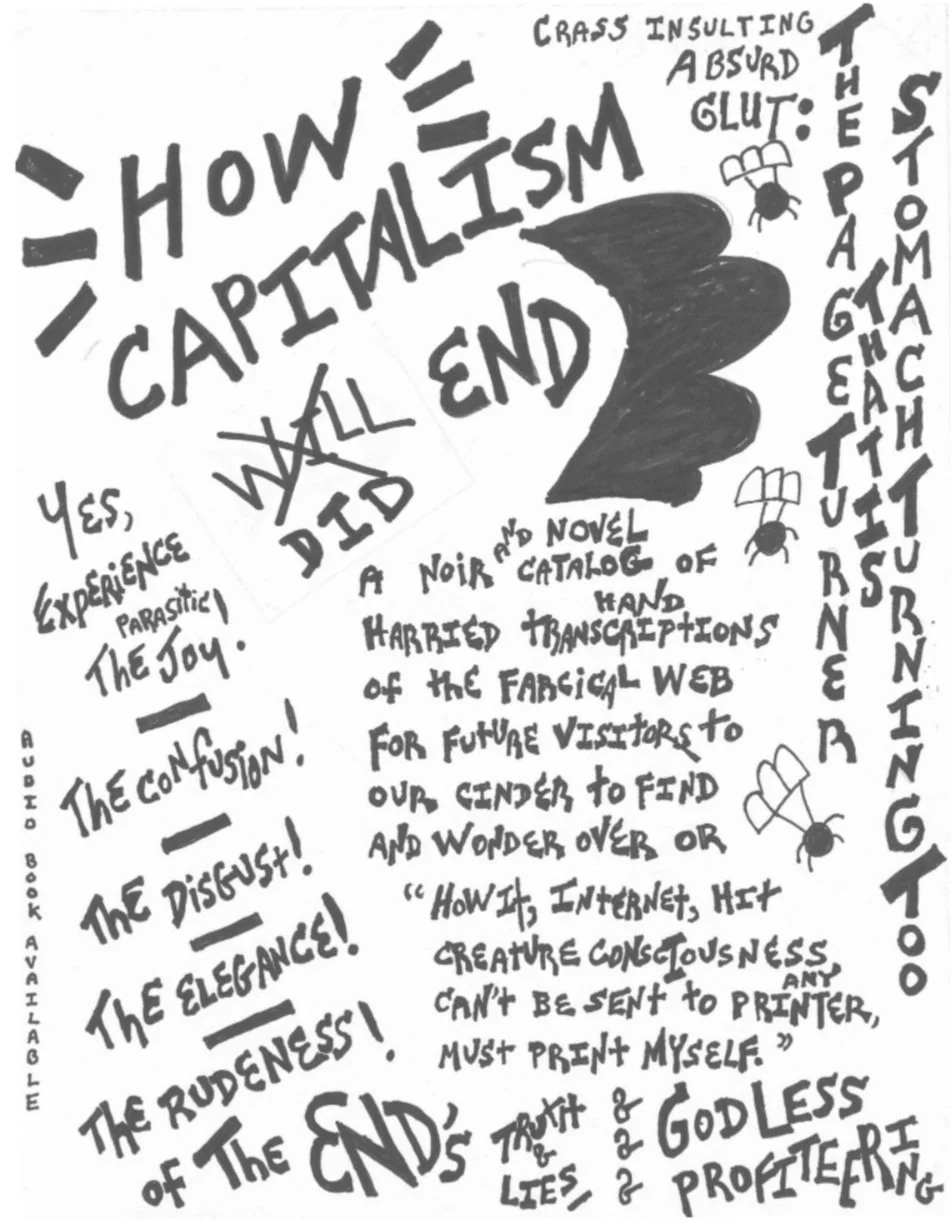
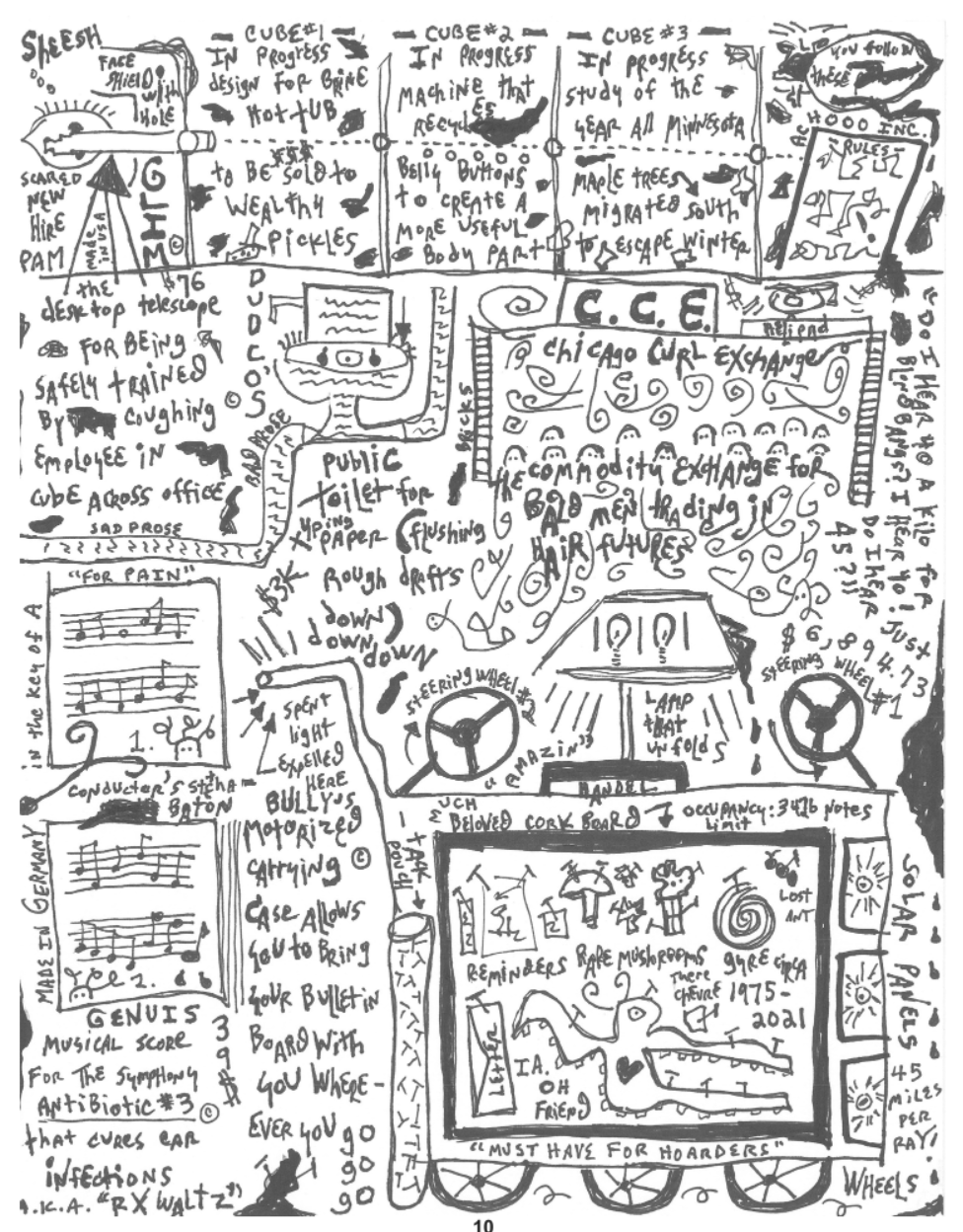
Synopsis of How Capitalism Did End:
While the planet perishes from the nihilism of greed, pollution, and violence targeting vulnerable populations, an anonymous citizen—in an act of urgent archivism—transcribes portions of the Internet by hand to create a hard-copy that cannot be erased when the Cloud goes down. Recorded here are craven products and absurd services designed both to distract people from the disaster’s gravity and to squeeze final fat profits out of faltering societies. But is the antic catalog less anthropological artifact than intimate evidence of how barrages of marketing polyphony distend (or mutilate) emotions and sensory perceptions in epic fashion? Among antecedents to this montage form of ethical exploration are Letters from the Earth by Mark Twain, Cane by Jean Toomer, The Devil’s Dictionary by Ambrose Bierce, Wacky Packages stickers (circa 1970s) and the unstoppable blues of Abbey Lincoln, dissolver of notes to make melodies sing of harrowing things.
Ben Miller is the author of the recently released Pandemonium Logs: Sioux Falls, South Dakota 2020-2022 (Raritan Skiff Books, an imprint of Rutgers University Press) and River Bend Chronicle: The Junkification of a Boyhood Idyll Amid the Curious Glory of Urban Iowa (Lookout Books). His writing has been anthologized in Best American Essays and Best American Experimental Writing, and his awards include fellowships from the NEA and the Radcliffe Institute.
At the Café Huracán across from Salomeja Neris (“The Traitor”) High School
Pietro’s cigar smoke hardly made a dent in the air.
This is Griselda, he said (I think), leaning back
on the wooden bench, saying – your colleague,
Vilnius University, Lithuanian philology.
But you’re in translation studies, poetry, yes?
Yes, but I don’t think Griselda was impressed,
her hair settled to the tonal range of our clouds,
her body swaddled tight against the sharp
autumn day, her smile making me hunch
like the wind that whipped the roofs of German Street
as she mentioned how happy she was that Latakas won
the Jotvingian Prize this year (he seems post-modernly
atavistic to me, which, I admit, is kind of interesting),
and how she loves Stankevičius no matter what anyone says
(ah, it starts to make sense, I thought: the old lady who loves
the powerfully elevated voice, the one which I once
tried to capture in English, but it fled from me like Keats’ bird),
and she talked of living in this Soviet block-building
(built over the ghetto’s ruins) as a young woman,
of how Širvys came to her apartment to watch soccer
because he never had a TV, how Vačiūnaitė lived
just upstairs, how Marcinkevičius would drop by,
how so-and-so would play chess with her,
and so-and-so brought so many books from the library
(ones that were not so easy to get, I was meant to understand),
and she would read and read, a straight A book nerd
reminiscing about the house with the writers –
because the Soviets liked to keep them
all in one place. Oh the impromptu recitals!
The parties they had! The memory of Vačiūnaitė
giving birth before her very eyes made
those now dimmed salon lights sparkle and flare
like candles before they go out. The memory
of the lesser poet jumping off the balcony
brought the shadow of a broken body
to the mirror of her memory. But it was all
as it had to be, for this is what is expected of poets.
And you couldn’t help but feel that this had been
the best time of her life, even as the translator
from Italy tried to moderate her: “That’s how it looks
to you now.” But I knew that’s how it was for her,
the young woman in love with words
fawning over the inspired native tongues
of a colonized nation (remember how Sartre
told Plečkaitis they should write in Russian),
being accepted even if it meant smuggling
Širvys’s booze into the Vilnius Žalgiris match
because he was too big to be caught with such a thing,
and she, well, she was she and is still so.
I don’t think she ever moved out.
–Rimas Uzgiris
Rimas Uzgiris is a poet and translator, author of North of Paradise (Kelsay Books), Tarp (poems translated into Lithuanian), translator of eight poetry collections from Lithuanian, and the Venice Biennale Golden Lion winning opera Sun and Sea. Uzgiris was born and raised in the USA, holds a Ph.D. in philosophy, and an MFA in creative writing from Rutgers-Newark. Recipient of a Fulbright Scholar Grant and NEA Translation Fellowship, he teaches at Vilnius University.