
Kwame Anthony Appiah: On Religious Practice and New Trust
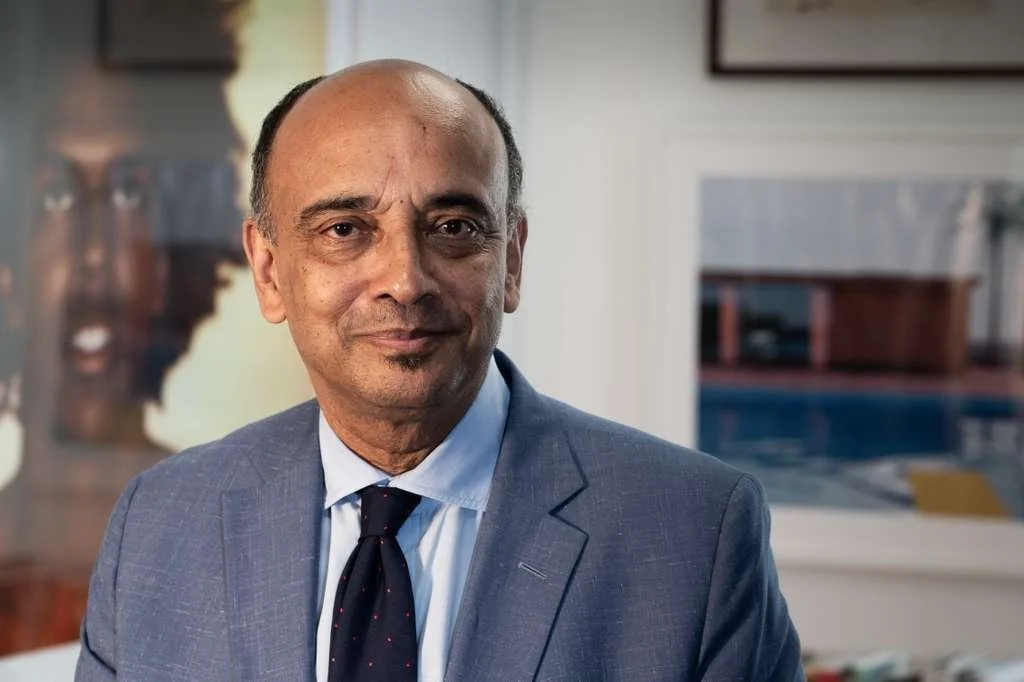
Kwame Anthony Appiah: On Religious Practice and New Trust Editor-in-chief emeritus Su Ertekin-Taner sat down with philosopher and professor Kwame Anthony Appiah. Kwame Anthony Appiah is the Silver Professor of Philosophy and Law at New York University. He was raised in Ghana and educated at Cambridge University, and has taught philosophy on three continents. His books include The Ethics of Identity, Cosmopolitanism, As If: Idealization and Ideals, and, most recently, Captive Gods: Religion and the Rise of Social Science.
This interview has been edited for brevity and clarity.
I. An Ouroboros of Social Science and Religion
Su Ertekin-Taner: So I wanted to first ask you a question that strikes me as fundamental to the book: what is presently concerning you about the relationship between social science and religion? Alternatively, what compelled you to tackle the “ouroboros,” as you say in the book, of social science and religion?
Kwame Anthony Appiah: I've thought about religion over and over again in lots of different ways over time. When I was asked to give the Terry lectures at Yale, which are about science and religion, I thought I would think about the science of religion. I had read a lot of that before. I already knew about the characters. I knew less about Simmel, but I knew about the main characters in this book: Durkheim and Weber and Tylor. And I'd written things about all three of them at various points in various places. But I hadn't really dug into what they had to say beyond reading the main books. And so in the first instance, I just went carefully through these books. And just decided what I thought about them when I looked at them in that detail. But then it turned out that some of what people thought about these characters was sort of disputed or contested. And so, I ended up doing a bit more intellectual history than I expected, a bit more digging into other things they wrote and to the context and to other people around them in order to get a picture.
The topic's important because of the claims they made, which is that you can't understand society without understanding religion. And of course, you can't understand religion without understanding society. They were making a constitutive point about the nature of society and the meaning of “religion.” Now, by and large, through most of human history, some of what we call religion has been pretty important to most people. And you might think, there's this separate area of life where people go to mosques and go to synagogue, and that doesn't have that much to do with anything else they do. That turns out not to be true in most societies.
SET: As a student of sociology, my sense is that American sociology today is very uninterested in religion. I think there are, as you know, some European sociologists that do that work though far fewer Americans. I wonder what you make of this, given your own intellectual interest in the sociology of religion?
KAA: I heard that, actually, towards the end of the process of writing this book. This is distressing to me because I like disciplines to take on important questions, and when a large discipline stops being interested in an important question, I worry. For Weber, Durkheim, Simmel, and Tylor, the sociology of religion was absolutely central to the study of society. The idea that you could do sociology without doing the sociology of religion would have struck all of them as preposterous. If religion has been de-centered, it could relate to a phenomenon that we have enough sociology of religion to have noticed: the rightward drift of serious religion in our country. This is not a global phenomenon, but in the United States. A lot of serious religion, where that means belonging to a religious institution, participating in it regularly, and having a sense of yourself as having a religious identity is, on average, quite conservative. And sociologists are, on average, not conservative, which could make them sort of suspicious of this thing.
Robert Putnam, who's a political scientist who co-wrote a book called American Grace about religiosity in America, has explored the link between religiosity in America and conservatism. He has this thing that he does where he asks the audience to raise their hands if they say grace at meals. Typically, not many do in a university audience, but he says to the ones that do, you're either conservative or African American. He ascribes the rise of what he calls the nones, the people who say “none of the above” when you ask their religion, to a sense among younger people that to say you're religious is to commit yourself to various forms of conservative politics, which they don't want to commit themselves to. That association has made the word religion a little bit toxic for some people.
SET: There certainly appears to be many areas that sociologists should be tackling that they aren’t. I find it particularly interesting that contemporary sociology doesn’t expressly study religion, but religious-like practices. I mean, activism is not so far off from a sort of religiosity.
This distinction between religion as a noun and religious as an adjective felt like one of the underlying points of the book as I read it. Where religious is a practice or relational way of being in the world, religion is an institution. I am curious how you assess the current state of this distinction. Is contemporary society far more religious or far more interested in religion?
KAA: That’s something that comes up in the work of Ulrich Beck—recent German sociologists have written a lot about religion. In my way of thinking about these things, there are questions about belief, questions about practice, and questions about community, which become questions about identity. All are important. The salience of the different ones is a bit different in different cases, and I think at different times.
We've got belief, propositional belief. Christ is God, died on the cross, redeemed us—these are all propositions. Then there's all the other side—the practice. What do we eat? How do we marry? How should we comport ourselves with respect to the king or the president and so on? The proper members of the community not only say the right things, they do the right things. So now, that distinction between orthodoxy and orthopraxy cross-cuts another question, which is how important a religious identity is. There are literally thousands of Protestant sects. In the West, there is one Roman Catholic Church, then there are forms of Orthodox Christianity. And then there's Eastern Orthodoxy of various sorts in Russia and Greece and Syria and so on.
For sociological purposes, attention to religion as identity is crucial. And I don't know that this was true to the same extent in the past. In the past, religious identities were very important for social life in the United States because most American sectarian traditions and religious groups were endogamous. Baptists married Baptists. Catholics married Catholics. Jews married Jews. And for some people, ideally, Jews of my kind married Jews of my kind. Reformed Jews married Reformed Jews. Now, most American families are multi-religious. Most Americans have, whatever their own sectarian identity, a relative who is of some other sect or religion. And the combination of the fact that we have all these multi-religious families with the fact that religion has gotten very politicized —those produce very interesting constellations of social problems. As you know, Americans now are more hostile to intermarriage between conservatives and liberals than they are to intermarriage between blacks and whites, which they used to be, on average, pretty opposed to.
II. An AI Animated
SET: I want to continue along another thread that feels salient to the text. In the book, you elaborate the context in which these social scientists grew up, wrote in, and found themselves. I was also very surprised to find that two of the four social scientists, Tylor and Durkheim, lost their religion in the process of theorizing. Given that you were so forthright in the text with your own relationship with religion, I wonder if you might elaborate on when and how you experienced a loss of personal religious commitment during your own intellectual journey.
KAA: My father was a Methodist, though he also lived in a world of traditional divinities or supernatural entities who had to be placated, and saw no tension there. My mother was baptized and confirmed in the Church of England because she grew up in England, but her church that she went to in Ghana was just a
church of generalized Protestants who ran the church together and invited different pastors and priests, different traditions to come and talk to them on Sundays. She was pretty relaxed about Muslims and Jews as well, actually, but she was devout. I mean, we went to church every Sunday. I grew up with the King James Bible and the Methodist hymn book, which is what we used. It overlaps a lot with the Anglican hymn book, which was what we used when I went to school. And I was very devout until my late teens.
My response to being a serious Christian as a teenager was to read philosophy and theology with my friends. On the intellectual side, I think that was what eventually led to my not believing anymore, because I found it increasingly difficult to say what the content of the theological claims was, what they amounted to. I knew what the words were, but I decided I didn't really know what they meant. And then there were forms of alienation of one sort and another that probably played an emotional role. So, I like to say that I was born again as an atheist; but in part, I suppose, because I grew up in a devout family, it's never occurred to me that you would push for a world without religion. Except that, as a philosopher, to the extent that I think that some theological claims are false, I want to be free to argue that that's the case.
SET: I think the tension you highlight now—between the impulse to define religion and its ineffability—is central to the book. It’s particularly evident in the way many social scientists attempt to negotiate a definition of religion in relation to their contemporaries rather than from the ground up.
So, in a more pragmatic spirit, I am curious how you see the definition of religion evolving in response to technology? For example, I’m thinking of phenomena like hiring ethicists to train AI systems, or generative AI delivering religious guidance—both of which suggest a reciprocal relationship between technology and religious practice.
KAA: The phenomenon of bringing in self-identified religious experts to give ethical advice—that's not, of course, anything new. Indeed, until sometime in the late 19th century in much of Europe, if you were an institution seeking for ethical advice, you went to the church and you went to religious people. And it's still the case. A lot of the ethics committees in hospitals have clerics on them. I think there's a good reason for that, which is that those religious people who are in the business of pastoral care have everyday exposure to the challenges faced by the people in their congregations, their parishes, their communities. And they are asked for advice by those people. And so they have long practice in giving advice to people who are facing challenges. And I don't find it surprising that they therefore can get to be quite good at it. I don't have to be either theologically or in any other way Jewish to think that it might be good to consult a rabbi sometimes about questions that I have, because rabbis have a long tradition of thinking about important questions.
So I welcome wide consultation about how we should think about what AI is changing in our world. At the same time, one thing AI is very good at is channeling a kind of broad underlying consensus about certain things, because it's looking for the most likely next word, as it were, and this can give voice to a cultural average. Or at least the average of whatever their training data and tuning procedures reward. And so I would have thought one interesting thing to do with AI is to—and people have done this by the way—constrain the model to a particular canon and interpretive tradition. You bolt on a set of texts, whether it’s Catholic moral theology or Buddhist suttas plus commentaries, and then ask: given this corpus, what would an answer look like? That seems to be an interesting enterprise. It's a quick way of seeing what the texture of thought is in a body of writing, especially if it's large enough. That's something in the sphere of the study of religion that I think it might be interesting to pursue further using the new technology.
SET: Hm. Like having an ethicist on hand.
KAA: Another thing that the existing AI confirms is a hypothesis of Tylor's, which is that people are incredibly easily persuaded to treat things as if they were people, which is. a feature of what Tylor called animism. It's the belief that there are spirits everywhere, and it's treating trees as if they were inhabited by minds. Of course, most people respond to AI as if it were a person. They resist the thought that all that's going on is that a machine is producing sentences by predicting, token by token, what is most likely to come next on the basis of patterns learned from vast amounts of text. So it's not unimaginable that there will be people who take some form of AI to be producing a kind of religious message, to be the voice of something.
III. Beginning with Trust
SET: Let’s continue along the contemporary line of thought. At the end of the book, you return to Simmel's distinction between “belief that” and “belief in,” where “belief that” is an assent to fact and “belief in” describes an orientation of trust. I wonder now, as we take on the many plights of the world that we’ve discussed today—like polarization, technological acceleration, erosion of social trust—what would you advise that we “believe in,” which is more consequential to Simmel?
KAA: I think we should put trust in institutions that are well made to serve their central purposes. And that means that when we're thinking about understanding things, I believe we should put our trust in the
people who've made the most serious effort to understand them, which in our world is usually going to be academics of some sort. Academics can get things wrong. Anybody can get things wrong. Whole fields can get things wrong for a while. Still, we have a better chance of solving our problems if we try to identify the people who are seriously trying to understand what's going on so that we can then intervene. But the interventions should be guided by our political institutions. And for them to be worthy of trust, they have to be democratic and open and not on the side of one social group against others, not on the side of one religion, one race, one social class, one kind of worker.
For a citizen, I think the great challenge of the present is to identify which epistemic institutions—which social and political institutions—deserve trust. Our current state of hyperpolarization means that we often don't even begin the processes of trying to understand one another that make trust possible. We begin with mistrust, and getting from there to anywhere is extremely difficult. Our political institutions are not doing a very good job of managing this. I would say that our social media are not really helping very much. And thinking about ways to reform our political institutions and our social media, consistent with the democratic idea that we're all equally charged with managing the republic together, is a real challenge. In a way, “believing in” is prior to “believing that” because what’s reasonable to “believe that” depends on who you “believe in.”
SET: Absolutely.
KAA: The great glory of our species is that we can learn together, learn from one another. I still learn from things written down from Aristotle's lectures two and a half millennia ago. If we didn't have writing and speech, I couldn't do that. But once you've created the possibility of learning from one another, you’ve created at the same time the possibility of deceiving one another, misleading one another, misguiding one another. And it's really important to think about how not to do that. I don't think there's enough focus on that question in our life. And the sociology of the processes by which trust is created and destroyed is one of the things we need to understand if we're to make any progress.